
SSC CGL 2025 Results: What the First Round of Tentative Allocation Actually Means
SSC CGL 2025 Results: What the First Round of Tentative Allocation Actually Means
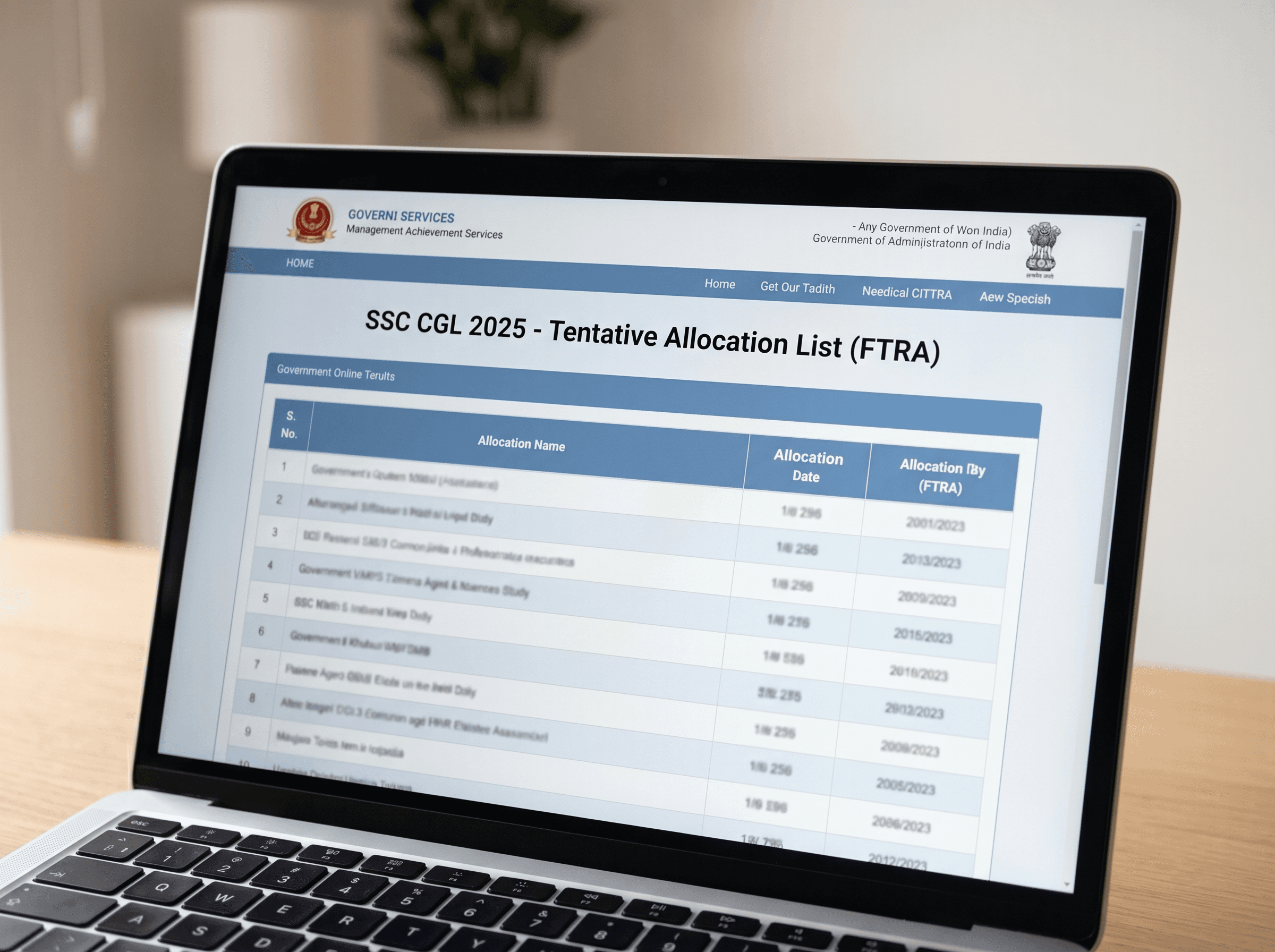
If you have been following SSC CGL 2025 news over the past few weeks, you may have come across terms like “First Round of Tentative Allocation” or “FTRA.” Many students and parents are understandably confused about whether this means the final results have been declared. The short answer is — they have not.
Here is a clear explanation of where things stand.
What Has Actually Been Published
The Staff Selection Commission has published the First Round of Tentative Allocation (FTRA) for SSC CGL 2025. This is not the final result. It is the first stage in a multi-step post-exam process that eventually leads to formal appointment.
The final SSC CGL 2025 results are expected to be published within the next one to two months from the date of this article.
What Is the First Round of Tentative Allocation?
Once the SSC CGL merit list is finalised, selected candidates go through an allocation process where they are assigned to specific departments and posts based on their rank, their post preferences, and the available vacancies in each department.
The First Round of Tentative Allocation is exactly what the name suggests — a preliminary, non-final distribution of candidates across posts. SSC releases this list to allow candidates to review their tentative assignment and flag any discrepancies before the final allocation is confirmed.
At this stage, the allocation is not permanent. It can change based on objections raised by candidates, vacancy revisions by departments, or subsequent rounds of allocation for candidates who were not covered in the first round.
What Happens After the First Round?
The process after FTRA typically involves the following steps:
Candidates review their tentative post and department assignment.
They may raise objections or preferences during a designated window.
SSC reviews objections and may release a second or revised round of allocation.
Once all rounds are complete, the final allocation list is published.
Candidates then receive joining instructions from their respective departments and the formal appointment process begins.
Can Your Rank Actually Improve After the First Round?
Yes — and this is something most aspirants do not realise.
After the First Round of Tentative Allocation, some candidates who appear on the list voluntarily withdraw. This happens for a variety of reasons: they may have already secured a position in another exam, they may not want the department they have been allocated to, or they may fail to clear document verification. In some cases, candidates simply do not respond within the stipulated timeframe.
When a candidate withdraws or is disqualified at this stage, their slot does not go unfilled. It opens up, and the next eligible candidate in the merit list moves up to take their place. This is precisely why SSC conducts multiple rounds of allocation — to ensure every available vacancy is filled and no eligible aspirant is left out unnecessarily.
The practical implication is significant. If you did not find your name in the First Round of Tentative Allocation, you are not necessarily out of the running. Depending on your rank and the vacancies available in subsequent rounds, you may still receive an allocation. This cascading process continues until all vacancies are filled or the eligible candidate pool is exhausted.
It is also worth noting that candidates who appear in the FTRA but are unhappy with their allocated post may raise a preference objection. If their objection leads to a reallocation, their original slot can again become available for someone further down the list.
The key takeaway: the merit list does not stop working after the first round. It continues to move.
What About State-Wise Rankings?
One important point that often causes confusion: SSC does not publish a state-wise rank list for CGL. There is no official way to determine how many candidates from a particular state have qualified. Any such figures circulating on social media or coaching centre pages are estimates or assumptions, not official data.
What This Means If You Are Preparing
The SSC CGL 2025 cycle is still ongoing, and allocations are being processed. If you are currently preparing for SSC CGL 2026 or any upcoming central government exam, this timeline is a useful reminder of how the process works. Selection is not a single moment — it is a structured process that takes months from exam to joining.
If you have been following SSC CGL 2025 news over the past few weeks, you may have come across terms like “First Round of Tentative Allocation” or “FTRA.” Many students and parents are understandably confused about whether this means the final results have been declared. The short answer is — they have not.
Here is a clear explanation of where things stand.
What Has Actually Been Published
The Staff Selection Commission has published the First Round of Tentative Allocation (FTRA) for SSC CGL 2025. This is not the final result. It is the first stage in a multi-step post-exam process that eventually leads to formal appointment.
The final SSC CGL 2025 results are expected to be published within the next one to two months from the date of this article.
What Is the First Round of Tentative Allocation?
Once the SSC CGL merit list is finalised, selected candidates go through an allocation process where they are assigned to specific departments and posts based on their rank, their post preferences, and the available vacancies in each department.
The First Round of Tentative Allocation is exactly what the name suggests — a preliminary, non-final distribution of candidates across posts. SSC releases this list to allow candidates to review their tentative assignment and flag any discrepancies before the final allocation is confirmed.
At this stage, the allocation is not permanent. It can change based on objections raised by candidates, vacancy revisions by departments, or subsequent rounds of allocation for candidates who were not covered in the first round.
What Happens After the First Round?
The process after FTRA typically involves the following steps:
Candidates review their tentative post and department assignment.
They may raise objections or preferences during a designated window.
SSC reviews objections and may release a second or revised round of allocation.
Once all rounds are complete, the final allocation list is published.
Candidates then receive joining instructions from their respective departments and the formal appointment process begins.
Can Your Rank Actually Improve After the First Round?
Yes — and this is something most aspirants do not realise.
After the First Round of Tentative Allocation, some candidates who appear on the list voluntarily withdraw. This happens for a variety of reasons: they may have already secured a position in another exam, they may not want the department they have been allocated to, or they may fail to clear document verification. In some cases, candidates simply do not respond within the stipulated timeframe.
When a candidate withdraws or is disqualified at this stage, their slot does not go unfilled. It opens up, and the next eligible candidate in the merit list moves up to take their place. This is precisely why SSC conducts multiple rounds of allocation — to ensure every available vacancy is filled and no eligible aspirant is left out unnecessarily.
The practical implication is significant. If you did not find your name in the First Round of Tentative Allocation, you are not necessarily out of the running. Depending on your rank and the vacancies available in subsequent rounds, you may still receive an allocation. This cascading process continues until all vacancies are filled or the eligible candidate pool is exhausted.
It is also worth noting that candidates who appear in the FTRA but are unhappy with their allocated post may raise a preference objection. If their objection leads to a reallocation, their original slot can again become available for someone further down the list.
The key takeaway: the merit list does not stop working after the first round. It continues to move.
What About State-Wise Rankings?
One important point that often causes confusion: SSC does not publish a state-wise rank list for CGL. There is no official way to determine how many candidates from a particular state have qualified. Any such figures circulating on social media or coaching centre pages are estimates or assumptions, not official data.
What This Means If You Are Preparing
The SSC CGL 2025 cycle is still ongoing, and allocations are being processed. If you are currently preparing for SSC CGL 2026 or any upcoming central government exam, this timeline is a useful reminder of how the process works. Selection is not a single moment — it is a structured process that takes months from exam to joining.

SSC CGL
SSC CHSL
CDS
AFCAT
SSC CPO
RRB
ESIC